
Personalized Hair Restoration For Women Experiencing Hair Loss & Thinning
Hair loss affects millions of women worldwide and can have a profound impact on confidence, self-image, and emotional well-being.
Unlike male pattern baldness, female hair loss often presents as diffuse thinning, widening of the part line, reduced volume, or gradual recession of the frontal hairline. Because the pattern is different, treatment planning also requires a different approach.
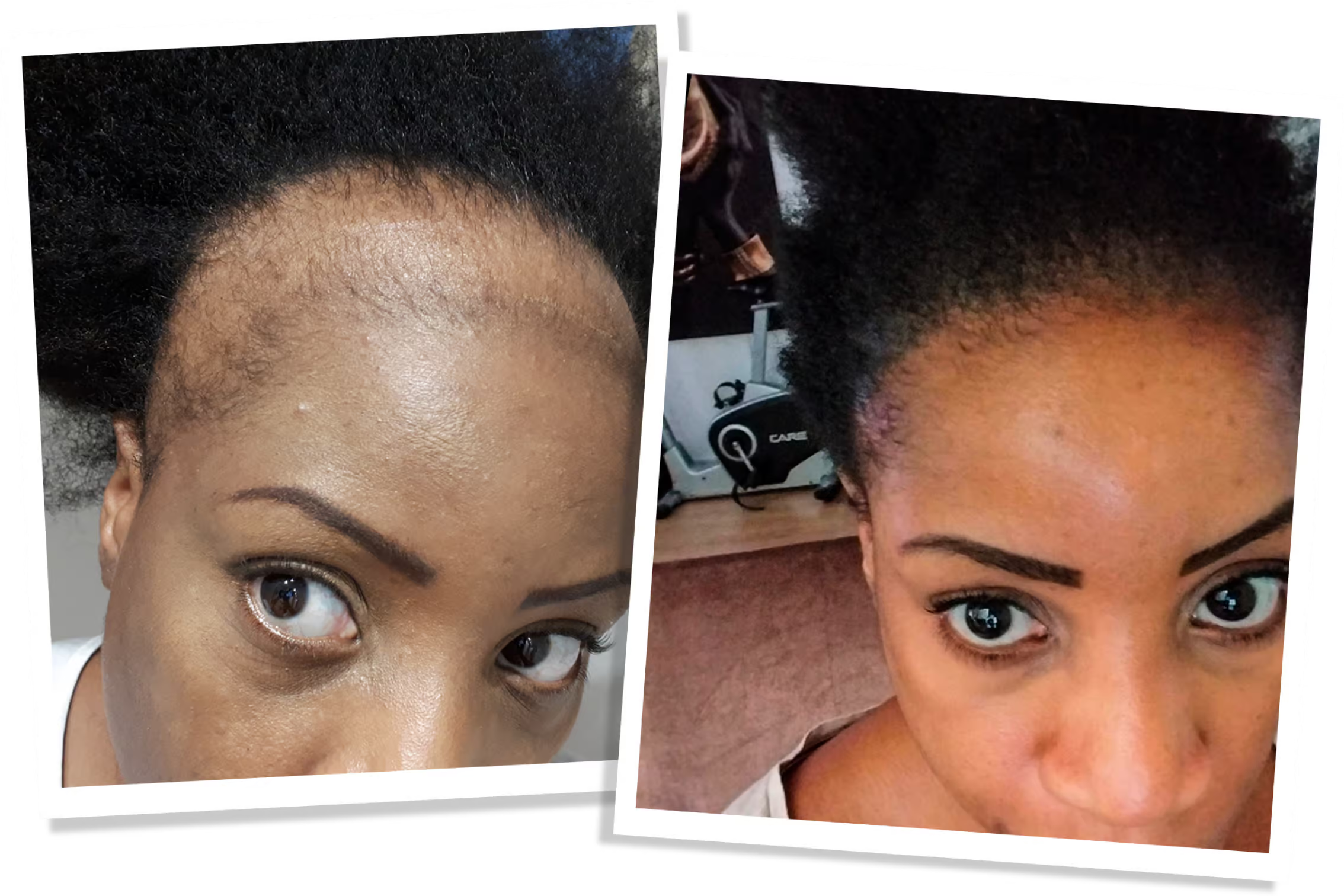
Understanding Female Hair Loss
Hair loss in women can occur for many reasons. Common causes include:
Not every woman experiencing hair loss is a candidate for transplantation. In many cases, PRP, GFC, medications, or other treatments may be recommended first.
What Is Female Hair Transplant?
A Female Hair Transplant is a procedure in which healthy hair follicles are relocated from donor areas to regions experiencing permanent hair loss or inadequate density.
The objective is not simply to add more hair. The goal is to restore:
- Natural density
- Facial framing
- Hairline aesthetics
- Confidence
Who Is A Good Candidate?
You may be a suitable candidate if:
- You have stable hair loss
- You have adequate donor density
- You have localized thinning
- You have frontal hairline recession
- You have traction alopecia
- You have realistic expectations
Who May Not Be A Candidate?
Hair transplantation may not be recommended if:
- Hair loss is actively progressing
- Diffuse thinning affects the entire scalp
- Donor density is insufficient
- Medical conditions remain untreated
- Underlying causes have not been diagnosed
A detailed consultation helps determine suitability.
The Procedure Process
Step 1: Consultation & Diagnosis
Evaluation includes:
Step 2: Treatment Planning
A customized treatment strategy is created based on:
- Hair characteristics
- Desired outcome
- Donor availability
Step 3: Follicular Unit Extraction
Healthy follicles are carefully harvested from donor areas.
Step 4: Recipient Site Creation
Precise recipient sites are created to match natural growth patterns.
Step 5: Graft Placement
Follicles are placed according to density and aesthetic planning.
Frequently Asked Questions
Does Female Hair Transplant Look Natural?
When properly planned, transplanted hair grows naturally and blends with existing hair.
Is The Procedure Painful?
Local anesthesia makes the procedure comfortable for most patients.
Will The Hair Fall Again?
Transplanted follicles are generally permanent. However, existing native hair may continue to thin if underlying causes remain active.
Can Women With Diffuse Thinning Have A Hair Transplant?
Sometimes. However, careful donor evaluation is essential because diffuse thinning may affect both donor and recipient areas.
Female Hair Transplant vs PRP vs GFC
| Treatment | Restores Bald Areas | Improves Existing Hair |
|---|---|---|
| Hair Transplant | ✓ | Limited |
| PRP | ✕ | ✓ |
| GFC | ✕ | ✓ |
Many women benefit from a combination approach.