
The Difference Between Hair And A Natural Hairline
Hair transplantation is not only about graft survival.
The hairline determines how natural the final result appears.
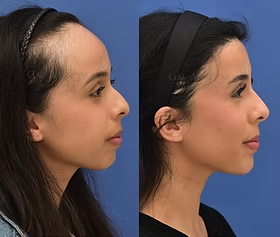
A well-designed hairline should complement facial proportions, age, ethnicity, and future hair loss patterns.
Factors We Consider
Age
An aggressive youthful hairline may appear unnatural later in life.
Facial Structure
Hairlines should complement forehead dimensions, facial proportions, and temple contours.
Hair Characteristics
Every design adapts to individual thickness, curl, density, and color contrast.
Reasons Patients Seek Hairline Surgery
- Receding hairline
- High forehead
- Previous transplant correction
- Hairline asymmetry
- Cosmetic enhancement
Natural Hairline Principles
- ✓ Contain irregularity
- ✓ Avoid straight lines
- ✓ Follow natural facial proportions
- ✓ Age appropriately
Why Hairline Design Matters
Even excellent graft survival cannot compensate for poor hairline planning. The hairline remains the absolute most visible part of any successful hair transplant.
Common Questions
Can My Hairline Be Lowered?
Many patients qualify seamlessly depending on individual scalp flexibility and donor hair availability.
Will It Look Natural?
A completely natural appearance depends heavily on flawless strategic planning, micro-graft selection, and ultra-precise direction placement.
Schedule A Hairline Consultation
Discover the most suitable hairline design custom-tailored for your unique facial features and long-term aesthetic goals.