
Permanent Beard Restoration For Patchy, Sparse & Uneven Facial Hair
A well-defined beard plays an important role in facial aesthetics, jawline definition, and overall appearance.
However, many men experience:
- Patchy beard growth
- Sparse density
- Uneven beard patterns
- Beard scars
- Incomplete facial hair development
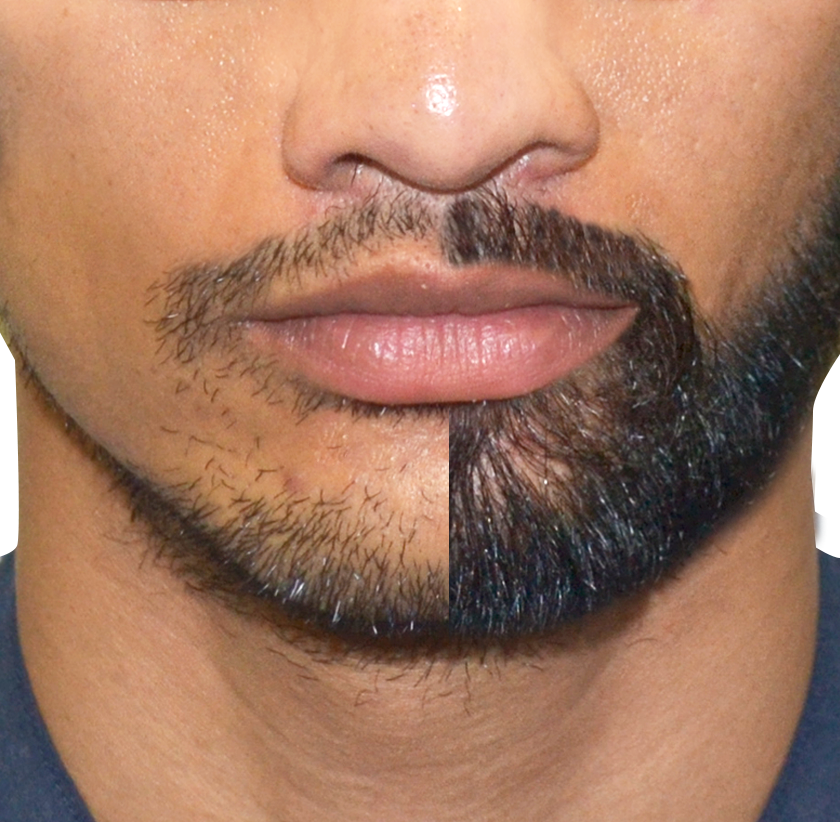
What Is A Beard Transplant?
A Beard Transplant is a hair restoration procedure in which healthy follicles are extracted from donor areas—typically the back of the scalp—and implanted into the beard region.
The objective is to create:
Once established, transplanted beard hair behaves like normal facial hair and can be trimmed, shaved, and styled.
Who Is A Good Candidate?
You may be a suitable candidate if you have:
- ✓ Patchy beard growth
- ✓ Sparse beard density
- ✓ Uneven beard patterns
- ✓ Facial scars affecting beard growth
- ✓ Adequate donor hair
Common Reasons Men Seek Beard Transplants
Patchy Beard Growth
#01The most common concern.
Many men naturally develop uneven beard density that does not improve with age.
Weak Cheek Coverage
#02Strategic graft placement can improve overall beard appearance.
Some individuals have strong moustache and chin growth but limited cheek density.
Beard Asymmetry
#03Transplantation can improve balance and symmetry.
One side of the beard may grow differently from the other.
Scar Camouflage
#04Beard transplantation can help conceal scars caused by:
How A Beard Transplant Works
Consultation & Beard Design
A personalized beard design is created based on:
- Facial structure
- Existing beard pattern
- Density goals
- Styling preferences
Donor Assessment
Healthy donor follicles are evaluated for suitability.
FUE Extraction
Individual follicles are harvested using advanced FUE techniques.
Recipient Site Creation
Tiny recipient sites are created at precise angles and directions.
This is one of the most important steps in achieving natural results.
Graft Placement
Follicles are implanted according to the beard design plan.
Recovery Timeline
Healing and crust formation.
Temporary shedding phase.
New growth begins.
Noticeable density improvement.
Final beard maturation.