
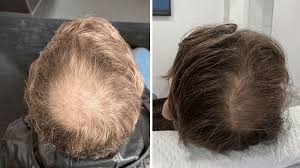
Best PRP Therapy Benefits for Hair Growth
Hair thinning and hair loss can affect people of all ages and may gradually become a concern for both appearance and confidence. While several treatments are available for hair loss, PRP therapy for hair growth has gained considerable attention as a minimally invasive treatment option, particularly for people with pattern hair loss.
PRP, or platelet-rich plasma, uses a concentrated component of the patient’s own blood and is injected into areas of the scalp affected by thinning. Research suggests that PRP may improve hair density and reduce hair loss in people with androgenetic alopecia, although treatment protocols and individual responses can vary. Recent systematic reviews have found promising results, while also highlighting the need for more standardized, high-quality studies.
So, what are the potential PRP therapy benefits for hair growth, and who may benefit from the treatment? Let’s take a closer look.
What Is PRP Therapy for Hair Growth?
Platelet-rich plasma therapy involves drawing a small amount of the patient’s blood and processing it to concentrate platelets. The platelet-rich portion is then injected into selected areas of the scalp.
Platelets contain various growth factors and proteins involved in tissue repair and regeneration. The proposed purpose of PRP in hair restoration is to create an environment that supports the activity of existing hair follicles.
PRP is an autologous treatment, meaning the material used comes from the patient’s own blood. This is one reason it has attracted interest as a minimally invasive approach to managing certain types of hair loss.
It is important to understand that PRP is not a hair transplant. A hair transplant relocates hair follicles from a donor area to areas with significant hair loss, whereas PRP aims to support existing follicles.
How Does PRP Help With Hair Growth?
Hair follicles go through different phases of a growth cycle. In pattern hair loss, susceptible follicles can gradually become smaller and produce finer, shorter hairs.
PRP is thought to work through the growth factors released by concentrated platelets. These may influence the local environment around hair follicles and potentially support follicular activity.
Clinical research has reported improvements in hair density following PRP treatment, although studies have used different preparation methods, injection schedules, and outcome measurements. A 2024 systematic review and meta-analysis of randomized clinical trials found an increase in hair density with PRP in androgenetic alopecia, but rated the evidence as low quality because of substantial variation between studies.
Top PRP Therapy Benefits for Hair Growth
1. May Increase Hair Density
One of the most important potential benefits of PRP is increased hair density.
A systematic review and meta-analysis published in 2022 analyzed 30 studies involving 687 patients and found that PRP treatment was associated with improvements in hair density and hair thickness.
Another meta-analysis of randomized controlled trials found that PRP significantly increased hair density at three and six months compared with placebo.
This means PRP may be particularly useful for people who still have existing but thinning hair follicles rather than completely bald areas where follicles are no longer functioning.
2. May Reduce Hair Shedding
Excessive shedding is often one of the first noticeable signs of hair loss. By supporting the activity of existing follicles, PRP may help reduce ongoing hair shedding in some patients.
A recent systematic review and meta-analysis published in 2025 found that PRP was associated with reduced hair loss across the studies reviewed. It also reported favorable effects on hair density and patient satisfaction, although differences in treatment protocols remain an important limitation.
However, persistent or sudden hair shedding should always be medically evaluated because hair loss can have many causes beyond androgenetic alopecia.
3. May Support Thinning Hair
PRP is generally more relevant to areas where follicles are still present but producing progressively thinner hair.
People with early or moderate pattern hair loss may therefore be considered for PRP after appropriate evaluation. The objective is generally to improve the quality and density of existing hair rather than to create entirely new follicles.
The suitability of treatment depends on the cause and extent of hair loss, the condition of the scalp, and the availability of viable follicles.
4. Uses the Patient’s Own Blood
One of the distinctive features of PRP therapy is that the platelet-rich material comes from the patient’s own blood.
Because it is autologous, PRP does not involve transplanting tissue from another person. This makes it an attractive treatment option for some patients.
Nevertheless, PRP is still a medical procedure involving injections, and it should be performed by an appropriately qualified healthcare professional in a suitable clinical environment.
5. Minimally Invasive Treatment
Compared with surgical hair restoration procedures, PRP is minimally invasive. It involves a blood draw and injections into the scalp rather than the surgical extraction and transplantation of hair follicles.
Patients may experience temporary discomfort, tenderness, redness, swelling, or bruising around the injection sites. Studies generally report no serious adverse effects, but individual risks should be discussed with the treating doctor.
6. Can Be Used Alongside Other Hair-Loss Treatments
PRP does not necessarily have to be considered as a standalone treatment.
Depending on the patient’s diagnosis and medical history, a dermatologist may recommend combining PRP with other evidence-based treatments. Research evaluating PRP combined with minoxidil has reported improvements in hair growth compared with either treatment alone in some studies.
A 2025 systematic review comparing PRP with topical minoxidil found that both treatments can be useful for androgenetic alopecia, but the available evidence does not establish PRP as universally superior to minoxidil.
Therefore, combination treatment should be considered only when medically appropriate rather than assuming that more treatments will automatically produce better results.
7. May Improve Patient Satisfaction
Hair loss is not only a physical concern; it can also affect self-confidence and quality of life.
Clinical studies have reported favorable patient satisfaction following PRP treatment. The 2025 meta-analysis of PRP for alopecia found generally favorable patient satisfaction alongside improvements in hair density and reduction in hair loss.
However, expectations should remain realistic. PRP cannot guarantee complete hair restoration or restore the density a person had earlier in life.
Who May Be a Good Candidate for PRP?
PRP may be considered for people with certain types of non-scarring hair loss, particularly androgenetic alopecia, also known as male or female pattern hair loss.
It may be more useful when hair follicles are still present but have become weaker or thinner.
Before treatment, a dermatologist or hair restoration specialist should determine the cause of hair loss. Depending on the symptoms, medical history, and examination, additional tests may sometimes be appropriate.
PRP may not be the appropriate treatment for every type of hair loss. Conditions involving scarring of the scalp, active scalp disease, nutritional deficiencies, hormonal disorders, or other underlying causes may require different treatment.
How Many PRP Sessions Are Needed?
There is no universally accepted PRP treatment schedule.
Different clinical studies have used different numbers of sessions, injection techniques, intervals, and PRP preparation methods. This variation is one of the reasons it is difficult to recommend a single protocol for every patient.
Your doctor may recommend a series of sessions followed by maintenance treatments depending on your response and the underlying cause of hair loss.
It is important not to judge the treatment too early. Hair growth is a gradual biological process, and visible changes may take several months.
When Can You Expect PRP Hair Growth Results?
PRP does not produce instant hair growth.
The response varies from person to person and depends on factors such as the cause and severity of hair loss, age, overall health, follicular condition, treatment protocol, and whether other hair-loss treatments are being used.
Some patients may notice reduced shedding or changes in hair quality before significant visual improvement becomes apparent. Clinical studies have commonly evaluated outcomes over periods of several months.
Regular follow-up allows the treating doctor to evaluate progress and determine whether continued treatment is appropriate.
Is PRP a Permanent Solution for Hair Loss?
PRP should not be presented as a guaranteed or permanent cure for hair loss.
Pattern hair loss is often a chronic condition. Even when PRP produces improvement, continued management may be necessary to maintain hair health and address ongoing progression.
For this reason, PRP should ideally form part of a broader hair-loss management plan based on an accurate diagnosis.
PRP Therapy vs Hair Transplant
PRP and hair transplantation serve different purposes.
PRP aims to support existing follicles and may improve the density or quality of thinning hair. A hair transplant physically moves follicles from a donor area to areas where hair has been lost.
Someone with early thinning may potentially benefit from non-surgical treatment such as PRP, depending on the diagnosis. Someone with advanced baldness may require a different approach, including consideration of hair transplantation.
In some cases, PRP may also be used as part of a broader hair restoration plan. The appropriate treatment should be decided after an individual assessment.
What Should You Consider Before PRP Treatment?
Before choosing PRP therapy for hair growth, consider:
- The underlying cause of your hair loss
- The extent and pattern of thinning
- The condition of your scalp and existing follicles
- Your medical history and medications
- The PRP preparation and treatment protocol being offered
- The experience and qualifications of the treating professional
- The expected number of sessions
- The total treatment cost
- Realistic expectations regarding results
Be cautious about clinics that promise guaranteed regrowth, permanent results, or dramatic transformation within a few weeks.
Conclusion
The potential PRP therapy benefits for hair growth include improved hair density, reduced hair shedding, support for thinning follicles, and a minimally invasive treatment approach. Scientific evidence, particularly for androgenetic alopecia, is encouraging, with multiple systematic reviews reporting improvements in hair density. At the same time, researchers continue to highlight differences in PRP preparation methods and study quality, so PRP should not be promoted as a guaranteed solution for every type of hair loss.
The most important first step is identifying the reason behind your hair loss. A consultation with a qualified dermatologist or hair restoration specialist can help determine whether PRP is appropriate and whether it should be combined with another treatment.
When used for the right patient and with realistic expectations, PRP can be a useful component of a comprehensive approach to managing hair thinning and supporting healthier-looking hair.